Rebuilding out of COVID-19

By 5th May, 2021 Care Home, covid-19 Comments Off

As lockdown begins to ease, this might be the first time you are able to see your relative with dementia this year. With such a long time apart changes in their condition may be more apparent and trying to ensure COVID-19 guidance is followed may be particularly hard when your focus will be making sure the person with dementia is as safe and comfortable as possible. However it is important that we continue to stick to the rules to try and ensure we don’t have to deviate from the current roadmap.

The biggest news must be the ability to now visit loved ones in their care homes. This can be two visitors (one at a time) on a regular basis (ie the same two people must visit each time). This brings with it another set of challenges… what if your mum is in a care home and you are one of three siblings, how do you choose? How do you explain to your mum, when communication is more difficult, that one of her children isn’t allowed to visit. Although not perfect, it is progress and we will continue to arrange video calling for all those who are unable to visit for whatever reason.

With the widespread launch of free lateral flow testing, we hope that COVID-19 is coming under control and we will continue to test our staff regularly. We will also ask anyone entering the home to test and await their result before they are allowed to enter. Please bear this in mind if you are coming to visit, that you will need to arrive 30minutes prior to your slot to allow time to take the test and await the results.

For the foreseeable future we will continue to live with restrictions to protect the NHS and continue to save lives, so how can you start to introduce the “new normal” and begin to socialise once again with your loved one with dementia?

  • Embrace the time you do get to spend together, bring photo albums and reminisce about happy memories. Photo albums can be a great source of stimulation and will help not only reminisce but keep your loved one in touch with what has been going on in the family during the various lockdowns.
  • Use music to help stimulate conversation – play a favourite song or a song that takes you both back to a special event or place. Whenever I hear the lambada it always brings back a memory of my nana and grandad dancing on a warm sunny evening. It’s amazing how a song can take you right back to a moment in time.
  • Get outside together, whether this is a walk along the beach, in a park, or perhaps there is an activity you enjoy together like painting in the garden, or a spot of tennis. Activities give your loved one a sense of purpose and belonging.
  • Lockdowns have given even greater focus to technology and not everyone finds technology easy to use. It might be better to have a telephone call, rather than increase stress with new technology if your loved one hasn’t got the help they need. It is a good idea to call at regular times of the day to build a routine.
  • You could also send things through the post to help with the continued feelings of isolation – the world is opening up, but it is slow and the feelings of loneliness continue. This could be a letter or a card, or perhaps you could put together a photo book with descriptions and messages from other family members.

With all the new rules and regulations and COVID-19 guidance, remember this may be confusing and worrying for someone living with dementia. Continue to be understanding and patient and help them through the transition period to when we can hopefully all be together again.

COVID-19 and Dementia

By 29th March, 2021 Care Home, covid-19 Comments Off

There has been lots of talk in the press about the “forgotten victims of Covid” referring to school children and their education. Without doubt, they need more support and the make-shift homeschooling was no replacement for in school learning.


Working in the care industry we feel those suffering with dementia have truly suffered during the pandemic. If you read the research on dementia and reducing the affects, you will see the majority of advice and research shows the benefits of a routine and socialisation, both of which have been taken away to protect the vulnerable from catching COVID.


It’s a double-edged sword – on the one hand we need to protect people from catching COVID and potentially dying, however for those with dementia the loss of routine and socialisation may increase their dementia symptoms. In fact, the findings of a survey conducted by the Alzheimer’s Society of people with dementia and their carers, stated 82% of people reported an increase in symptoms among people with dementia after the March 2020 lockdown.


This was attributed mainly to a lack of cognitive stimulation and loss of routine. In the lockdown environment, we are no longer able to take part in stimulating or meaningful activities such as attending support groups or walking groups and are therefore limited to more mundane tasks. This has negatively affected people with dementia in terms of their illness and their self-worth.


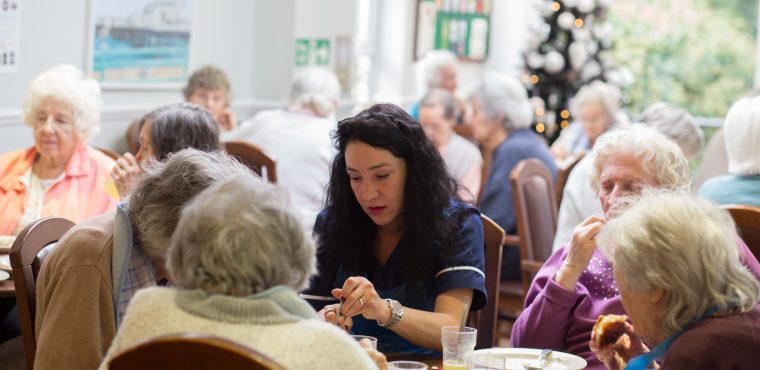
For us with the care home, we are lucky we can continue to socialise amongst the residents and we have a full entertainment programme to encourage interaction and general merriment. We can maintain the residents’ routine as much as possible, obviously anything that was part of their routine outside of the home has been reduced or stopped however we are currently still getting out in the fresh air.


For those at home with dementia, the past 12 months must have been so difficult, unable to see friends and family. Not able to go out and do normal activities like shopping, meeting a friend for coffee and cake, or sports. It really has taken its toll, Over a quarter (27.5%) of people who died with COVID-19 from March to June had dementia.

But now we look to the future and how we will transition out of a lockdown situation. For the majority of us, we are excited to return to some sort of normality, but for those with dementia the outside world may not be the familiar surroundings they remember. For example, different shop layouts and processes may be disorientating. Signs and floor markings could be confusing and people in masks might be unsettling and/or difficult to understand. With numerous new rules to follow to keep everyone safe, this is something else to worry about, and also how others might react if they were to get it wrong.


In order to have an easier transition out of our current lockdown status, it is essential that those with dementia are supported by carers, services and the wider society. It has been reported that after the last lockdown those with dementia felt forgotten and abandoned and generally felt there was a lack of support when exiting the first lockdown.


So when we are out and about and continuing to follow the social distancing guidelines, remember that there are people in our community who might not be able to wear a mask or understand why they need to wear one. In a shop, there might be people who find it hard to follow the signage or understand they need to keep their distance. We need to remember to treat these people with patience, kindness and compassion.


We hope that all the dementia friendly practices that had been adopted by many shops before the pandemic such as clear signage, and staff who are trained to support customers with dementia can continue. We need to include and consult with people with dementia to develop communication and processes that promote their wellbeing and social inclusion and help them to live in world that might not be as familiar to them as it was before.