
Unlock the secrets to a harmonious journey through life’s golden years as we delve into the incredible power of music and its remarkable impact on aging. From igniting nostalgic memories to enhancing cognitive abilities, join us on an exhilarating exploration of how this universal language can positively transform our minds, bodies, and souls. Embark on a melodic odyssey that will leave you tapping your feet, warming your heart, and embracing the beautiful symphony that accompanies every step of the aging process.
The elderly are often faced with many issues that can be helped through music therapy. For example, those who suffer from Alzheimer’s or dementia can use music to help them with memory recall and cognitive stimulation. Those who are dealing with depression or anxiety can benefit from the relaxation and distraction that music provides. And finally, those who are living with chronic pain can find relief through music’s ability to increase endorphins (the body’s natural painkillers).
Benefits of Music for the Aging Brain
As we age, our brains can experience a number of changes. But did you know that music can actually help to keep the aging brain healthy? Here are just a few of the ways that music can benefit the aging brain:
- Music can help to improve memory and cognitive function.
- Music can reduce stress and anxiety levels, which can in turn help to improve overall mental health.
- Music therapy has been shown to be effective in treating Alzheimer’s disease and other forms of dementia.
- Listening to music can also help to boost mood and energy levels, which can improve quality of life.
So if you’re looking for a way to keep your mind sharp as you age, consider making music a part of your life!
Types of Music Therapy for the Elderly
There are many types of music therapy that can be beneficial for the elderly. One type is receptive music therapy, which involves listening to music that is specifically chosen to meet the needs of the individual. This type of therapy can be used to help with relaxation, stress relief, pain management, and more.
Another type of music therapy is active music therapy, which involves participating in musical activities such as singing, playing instruments, or moving to the beat. This type of therapy can help improve mood, increase social interaction, and promote physical activity.
Both receptive and active music therapies have been shown to be beneficial for the elderly population.
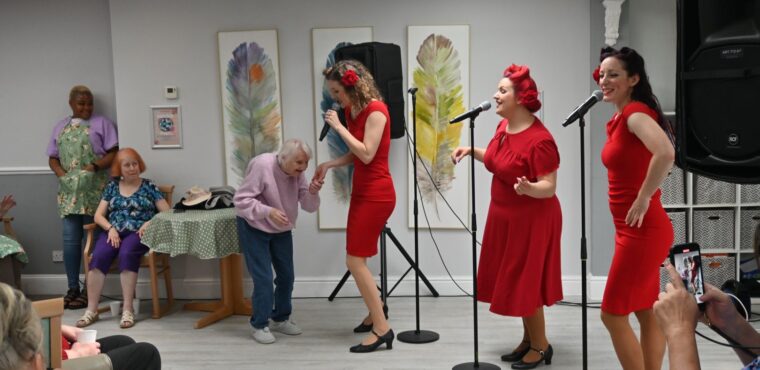
We love music at Grosvenor Lodge and regularly have live music events, and different musical entertainment for the residents and their families to enjoy. We had a great time this summer when the Daisy Belles came to visit playing 40’s, 50’s and 60’s music. The residents, staff and relatives were all dancing and singing along!
The Impact of Music on Emotional Wellbeing in Care Homes
It is widely accepted that music has the ability to affect our emotions. Studies have shown that music can be used as an effective tool to help improve emotional wellbeing, especially in older adults.
Music provides a sense of connection and companionship. It can also help to boost mood, reduce anxiety and promote relaxation.
There are many ways in which care homes can incorporate music into daily life. Residents could listen to music during mealtimes, take part in group singing sessions or dance along to their favourite tunes. There could also be opportunities to play musical instruments or attend live concerts. We like to take our residents out when we can and always ask the types of activities they would like to take part in. Each resident has an Alexa in their room loaded with their favourite music and we love having musicians to visit, so we can all sing and dance.
How Music Can Help with Cognitive Decline
While there is no one answer to cognitive decline, music has been shown to be a helpful activity in managing the symptoms. Participating in music therapy has been linked with better cognitive function and improved mental wellbeing in older adults.
In a study of adults over the age of 60, those who participated in eight weeks of music therapy had significantly improved scores on tests of verbal memory, executive function, and attention span. The participants also reported feeling more positive after completing the program.
Another study found that people with Alzheimer’s disease who participated in music therapy sessions showed improvements in mood and cognition. The music therapy group also had less anxiety and agitation than those who did not participate in music therapy.
These studies suggest that music can be a valuable tool in managing cognitive decline. If you are experiencing cognitive decline, talk to your doctor about whether music therapy could be right for you.
Tips for Incorporating Music into an Elderly Lifestyle
As we age, it becomes more important than ever to find ways to keep our minds active and engaged. One way to do this is by incorporating music into our lives. Music has been shown to have a number of positive impacts on the aging process, including reducing stress, improving mood, and even boosting cognitive function. Here are a few tips for incorporating music into an elderly lifestyle:
- Make time for music. Just as with anything else in life, if you want to reap the benefits of music, you need to make time for it. Set aside some time each day – even just 10 or 15 minutes – to listen to your favourite tunes or learn a new song.
- Get involved in musical activities. There are many ways to get involved in musical activities, from joining a choir or band to taking up an instrument. Not only will this help you enjoy music more, but it can also provide some much-needed social interaction.
- Use music as a tool for relaxation. If you’re feeling stressed or anxious, put on some calming music and take some deep breaths. You may also want to try listening to classical or nature sounds before bedtime to help you sleep better.
- Take advantage of technology. Technology can be a great way to access music at any time and place that’s convenient for you. There are many online streaming services that offer free or low-cost options for listening to music, each of our residents has their own Alexa in the room too!
Conclusion
Music has the power to bring joy to our lives and help us navigate through times of hardship. As we age, music can play an important role in maintaining a sense of wellbeing, providing comfort during difficult transitions and inspiring moments of peace and harmony. By introducing music into our daily lives, we can find ways to positively impact the aging process and enjoy a harmonious journey into old age.