
Music has the extraordinary ability to move us, transport us to distant memories, and evoke deep emotions. For people living with dementia, music can be even more powerful—it can act as a bridge to the past, improve cognitive function, and uplift their spirits. At Grosvenor Lodge, we’ve seen firsthand how music can transform the lives of our residents, helping them find joy and connection in a world that often feels unfamiliar.
Why Music Matters for People with Dementia
Dementia is a complex condition that affects memory, thinking, and behaviour. As dementia progresses, communication and memory become increasingly difficult. Yet, even as verbal skills decline, the ability to engage with music often remains. The areas of the brain associated with music are some of the last to be affected by dementia, which is why music can be such a powerful tool for those living with the condition.
Here are some of the remarkable ways music can benefit people with dementia:
- Awakening Memories and Emotions
One of the most well-documented effects of music on people with dementia is its ability to trigger long-forgotten memories. Familiar songs from childhood or early adulthood can evoke vivid recollections and emotions, helping residents remember moments they may have lost. This can lead to beautiful and meaningful interactions between residents and their loved ones, as they recall and share stories from the past.
- Reducing Anxiety and Agitation
Dementia can sometimes cause feelings of anxiety, confusion, or agitation. Music, especially calming and familiar melodies, has a soothing effect on the mind and body. Playing a favourite song or piece of classical music can help reduce stress levels, promoting relaxation and a sense of well-being. This can be particularly helpful during moments of distress or transition, such as during mealtimes or before bed.
- Improving Mood and Enhancing Engagement
Music has a unique way of lifting the spirit. Upbeat and joyful songs can energise residents, encouraging them to clap along, tap their feet, or even dance. Group sing-alongs can also create a sense of community, giving residents (and staff!) an opportunity to connect with each other in a joyful, shared experience.
- Promoting Physical Movement and Coordination
When people with dementia engage with music, it often encourages them to move. Whether it’s swaying gently to a ballad, clapping to the rhythm, or participating in a dance session, these activities promote physical health and coordination. Music therapy sessions that include simple movements can be a fun way for residents to stay active and engaged, even if mobility is limited.
- Facilitating Communication
For many people with dementia, expressing thoughts and feelings verbally can be difficult. Music provides a non-verbal way to communicate and express emotions. Residents may find it easier to express themselves through song or by playing simple instruments. Music can also create opportunities for loved ones and caregivers to connect, even when words are hard to come by.
How We Incorporate Music Therapy at Our Care Home
Understanding the power of music, we have made it a central part of our entertainment, activities and therapy sessions. Here are some of the ways we use music to enhance the well-being of our residents:
– Personalised Playlists: We work with families to create playlists of songs that are meaningful to each resident. Each resident has their own Alexa in their room. These personalised playlists are used during one-to-one sessions or quiet times to provide comfort and a sense of familiarity.
– Group Sing-Alongs: Our group singing sessions bring residents together to enjoy the classics, nursery rhymes, or old-time favourites. These activities not only foster social connection but also spark joy and laughter.
– Live Music and Performances: We invite local musicians to perform at our care home, bringing live music experiences to our residents. These performances create a lively atmosphere and give everyone something to look forward to.
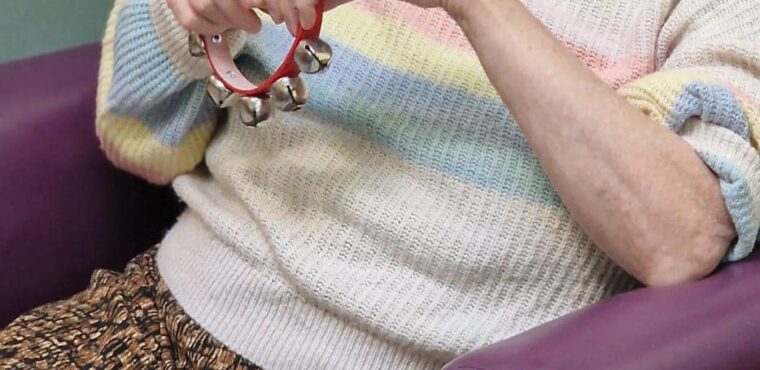
– Musical Instruments: Simple instruments like tambourines, maracas, or hand drums are used in sessions to encourage active participation. Residents often enjoy the tactile experience of making music themselves.
The Role of Family and Caregivers
Family members can also use music to connect with their loved ones with dementia. Even something as simple as singing a familiar lullaby or listening to a favourite album together can strengthen the bond between you. At our care home, we encourage families to share the music their loved one enjoys, so we can incorporate it into our care plans.
Music: A Source of Joy and Comfort
Music has the remarkable power to reach beyond the limitations of dementia and touch the hearts and minds of those living with it. In our care home, we’ve seen how a simple melody can bring comfort, rekindle precious memories, and create moments of happiness. We’re proud to use music as a way to enrich the lives of our residents and make every day a little brighter.
*For more information or to schedule a visit, please contact us. We look forward to sharing the joy of music with your loved one.*