
One of the hardest things about dementia can be maintaining a relationship with your loved one particularly as the dementia progresses, and now with the added complication of keeping your loved one safe through the Coronavirus outbreak this may seem even tougher.
Communication is so important to keep your loved one from feeling lonely – one of the factors mentioned by lots of those suffering with dementia. They talk about feelings of loneliness and isolation, so it is critical to try and keep your conversations going and to continue to communicate even when things get tough and life becomes more challenging.
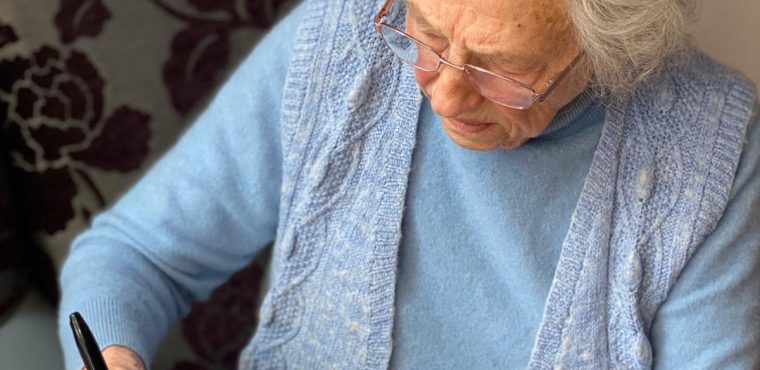
If you are unable to visit your loved one due to the Coronavirus, think of other ways you might be able to communicate with them. Could you organise a video call, or write a letter, perhaps a phone call might work. This week our residents are enjoying writing postcards to their families and loved ones.
We have a few tips which may aid you in communicating effectively with your loved one.
Preparation
- Minimise background noise
It can be difficult to concentrate with background noise, so try to ensure you are in a comfortable peaceful setting. This is particularly important if you are video calling. You need to have all your conversation on the call so go to a quiet spot (with good internet connection) and remove all of your own distractions.
- Relax
Although it can be frustrating at times, if you go into a conversation tense and uptight it is unlikely you will be able to have the calm and patience to let the conversation flow.
- Think about the other person
How are they feeling, try to empathise with their current emotion, are they feeling frustrated? Angry? Sad? Frightened? If you put yourself in their shoes it might help you to pitch the conversation at the right level. Think how you are feeling at the moment, worried, anxious, helpless, these could be some of the feelings your loved one is going through with all the change and lack of contact.
Starting the conversation
- Greeting
Although you may know the person well, would it be helpful to them to introduce yourself, or is “hello” enough.
- Approaching
Think about where the person is in the room. Are they sitting? If so, it would be less intimidating to approach them at eye-level. Position yourself so the light isn’t behind you and they have a good view of your face and ensure you make eye contact. This is less relevant on a phone call, but on a video call, ensure your face is visible in the screen.
Keeping the conversation going
- Concentrate
Concentrate during the conversation and pick up on other signals, body language, tone of voice, emotion all of these factors will add to your understanding of the conversation. Perhaps state how you think the other person might be feeling, this will help the other person to see that you care about their emotions.
- Keep it simple
Use shorter sentences and give the other person time to respond
- Use the person’s name often
This is a reminder you are talking to them and may help to keep their attention
- Use visual aids
Visual aids like images of what you are talking about can really help to improve understanding of a topic
- Correcting mistakes
In previous blogs we have said that it is better not to correct name mistakes as this can cause confusion and frustration for the other person. If you do feel the need to correct a mistake, think about how you do this. Perhaps you could ask a question for clarification.
- Keep it short
Communicating and concentrating can be tiring, so look for signs that your loved one is getting tired and perhaps consider bringing the conversation to a close earlier than perhaps you would normally.
Finishing the conversation
If you are leaving the person’s house, make sure you say goodbye, smiling and give them a hug or shake their hand to let them know that you are leaving. By smiling it shows you enjoyed the conversation. Tell them when you will be visiting next and perhaps leave a note nearby with the day, date and time you will visit so they can refer to it at a later date. At the moment, you don’t know when you will be able to visit, but rather than say this which may add to feelings of anxiety, why not say when you will call again.
We are currently arranging video calling for our residents as and when they or their loved ones have asked. We will also be letting loved ones drop off cards and gifts for Mother’s day. They will leave these at the door during meal times so as not to upset the residents.